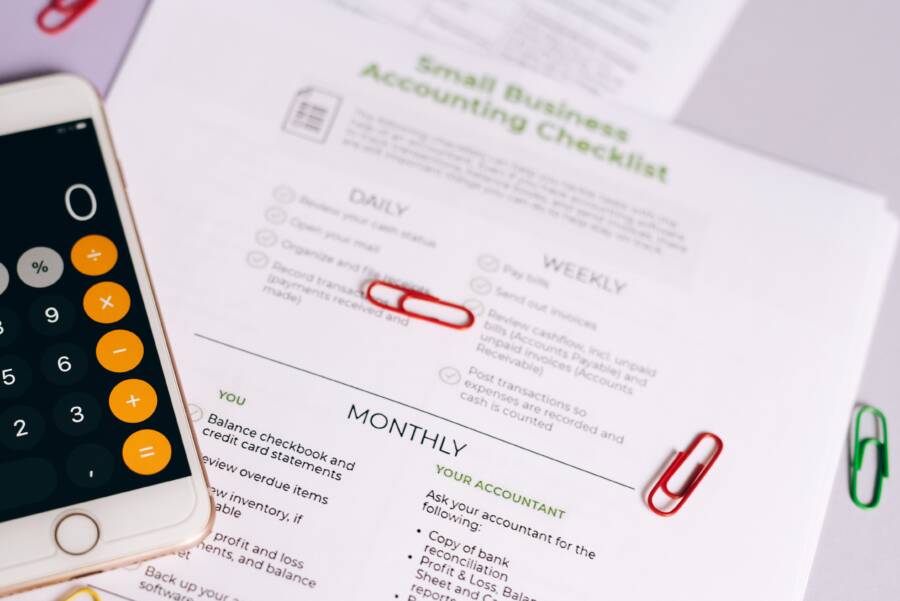
You feel overwhelmed because you have too many competing financial goals, anxieties, and conflicting pieces of information fighting for your attention. This constant noise makes it impossible to see your true path forward. You clear your mental space by narrowing your focus to a few core values and removing the clutter of unnecessary financial products or data.
Simplifying your money life requires you to let go of complex strategies that don’t serve your specific goals. When you stop trying to track every minor detail, you regain the bandwidth to manage what actually matters.
The following steps provide a clear path to prioritize your financial decisions and quiet the noise for good.
Understanding the Roots of Financial Mental Clutter
Financial mental clutter starts when the gap between your goals and your daily habits grows too wide. You possess a limited amount of decision-making energy every day. When you force this energy to process conflicting market reports, unsolicited investment tips, and complex tracking software, you leave nothing for the actual management of your money. This clutter is not just a nuisance; it acts as a barrier that keeps you from building real wealth.
The Impact of Information Overload on Wealth Building
Many people consume financial news as if it were a high-stakes game. They watch hourly ticker updates, read speculative blog posts, and listen to podcasts that highlight the latest market trends. This cycle creates a false sense of productivity. You feel like you are working toward your goals because you are engaging with money-related content, yet your portfolio often remains stagnant.
Noise is information that demands your attention but fails to improve your outcome. Strategy is the deliberate application of consistent, long-term actions. When you prioritize noise, you become reactive. You sell assets during minor dips or chase assets that have already peaked.
Consider the difference in these approaches:
Distinguishing between these two saves your mental energy. You should automate your core investments and ignore market commentary that offers no practical value for your specific situation. This change allows you to focus on increasing your income or improving your savings rate, which are the true drivers of wealth.
Why Competing Financial Goals Create Internal Friction
Conflict arises when your long-term vision struggles against your immediate desires. You want to fund a retirement account, yet you also want to upgrade your lifestyle or participate in social spending. This internal friction produces a heavy cognitive load. You spend hours debating whether a purchase is “worth it,” which drains the willpower needed to maintain your broader financial plan.
Prioritization is the only remedy for this stress. Without clear rules, every purchase feels like a moral battle. You can reduce this friction by assigning your money specific jobs before the month begins. When you designate a set amount for retirement, taxes, and bills, you define what remains for your lifestyle updates.
You no longer have to wonder if you can afford a purchase. If the money for that specific category exists, you spend it without guilt. If it does not exist, you know exactly why you are saying no. By removing the guesswork from your daily decisions, you stop the constant internal negotiation and direct your focus toward your primary objectives.
Practical Steps to Declutter Your Financial Focus
You reclaim mental energy by removing the friction from your daily money management. Most people suffer from decision fatigue because they leave their financial path open to daily debate. When you remove the need for constant choices, you stop treating your money like a chore and start treating it like a system. You can build this system by automating your core habits and simplifying your account structure.
Automating Your Savings to Free Up Decision Fatigue
You exhaust your mental resources when you look at your bank balance and debate how much to save every month. This internal negotiation creates a loop of guilt and anxiety that prevents you from making long-term progress. When you automate your savings, you remove the human element from the equation. You move money into your investment or savings accounts the moment your paycheck hits your bank account.
This practice forces you to live on what remains, rather than trying to save whatever is left over after a month of spending. You stop viewing savings as an optional decision you make when you feel flush. Instead, it becomes a fixed cost, just like your rent or internet bill. You will find that your lifestyle adjusts to the remaining balance without the psychological pain of choosing to set money aside repeatedly.
The setup process requires only a few minutes once. You can use your bank’s recurring transfer feature to move a specific dollar amount to your brokerage or high-yield savings account on the day you get paid. This approach creates a predictable rhythm that allows you to focus your attention on your work or family, rather than monitoring your accounts for the right moment to transfer funds.
Consolidating Accounts for a Clearer Financial View
Managing accounts across five different platforms creates unnecessary noise. You have to remember multiple passwords, monitor different interfaces, and reconcile varied tax documents at the end of the year. Every additional account represents another place where your data lives, which increases the mental load required to keep a clear picture of your net worth.
Consolidating your accounts allows you to see your full financial position in one or two views. You should consider rolling over old 401(k) plans into a single individual retirement account. If you maintain several checking accounts for different minor purposes, collapse them into one primary account that handles your daily expenses. This reduction makes it impossible to lose track of small balances or miss transaction errors.
Fewer accounts mean fewer statements to review and less effort to maintain. You gain a higher level of clarity when your assets sit in a unified structure. When you look at your financial life, you want to see a map rather than a puzzle. By limiting the number of entry points for your money, you make your periodic reviews faster, more accurate, and far less mentally taxing.
Comparing Approaches to Simplify Your Money Life
Different philosophies exist for managing personal finances. Some people prefer a high-maintenance system that tracks every cent, while others favor a low-effort approach that relies on broad automation. Identifying which style matches your temperament is the first step toward reducing your mental workload. You need a method that provides enough control to keep you secure without demanding constant attention that leads to burnout.
The Granular Tracking Method
The granular approach involves recording every transaction in a budget app or spreadsheet. People who use this method often set strict limits for dozens of specific categories like dining out, coffee runs, or subscription services. This provides extreme visibility into your spending habits and helps you identify small leaks in your budget.
However, this method creates significant mental overhead. You must enter data daily or weekly to ensure your records remain accurate. If you fall behind, the backlog of transactions becomes a source of stress. This style works best for people who enjoy data analysis and find comfort in knowing exactly where each dollar goes. If you struggle with precision, this level of detail often causes more anxiety than it solves.
The Macro-Budgeting Approach
Macro-budgeting focuses on a few major pillars instead of individual transactions. You designate percentages or fixed amounts for your core responsibilities, such as housing, savings, and debt repayment. Once those major buckets are filled, the remaining funds belong to you to use as you wish. You do not track how much you spend on groceries or entertainment as long as the total remains within your flexible, pre-defined limit.
This approach lowers your cognitive load because it removes the need to categorize every purchase. It turns your financial management into a set-it-and-forget-it system. You gain freedom and spontaneity in your daily life, provided you stay committed to your primary saving and investment targets. This method suits individuals who want to build wealth without spending their free time managing spreadsheets.
Comparing Financial Management Styles
Choosing the right path depends on your goals and how much time you want to spend on your finances. The table below outlines how these two primary approaches differ in practice.
Many people find that starting with a granular approach helps them understand their baseline spending habits. Once you recognize your patterns and fix any leaks, you can transition to a macro-budgeting style to save time and mental energy. There is no requirement to choose one path forever; you can adjust your intensity based on your current life phase or financial goals.
Key Takeaways for Financial Simplicity
You must minimize the friction between your money habits and your long-term objectives to maintain a clear mind. The most effective system is the one you actually stick to over time. If tracking every penny leaves you feeling exhausted, shift to a broader model that automates your progress toward your main goals.
Start by tracking your spending for one month to gain a baseline understanding of your habits.
Identify which expenses are essential and which are optional.
Automate your savings and fixed bill payments first.
Use a broader budgeting style for your variable spending to reduce daily decision fatigue.
Review your progress once per quarter rather than every single day.
Common Questions About Financial Mental Clarity
Achieving mental clarity with your finances is about reducing the friction that prevents you from making consistent decisions. You likely have questions about how to balance the need for control with the desire for simplicity. Addressing these concerns helps you move past the paralysis of analysis and start managing your money with more confidence.
Does simplifying your finances mean you lose control over your money?
Simplifying your financial system does not mean losing control. You are actually moving from a reactive state to an intentional one. When you track every minor transaction, you confuse activity with progress. You might know exactly where every dollar goes, but that data rarely changes your long-term wealth trajectory.
True control comes from setting clear rules at the beginning of the month. You define how much you save, invest, and spend on fixed obligations. After you automate these pillars, you gain the freedom to spend the remainder without constant oversight. You keep the control you need while eliminating the daily burden of granular monitoring.
Is it possible to be financially secure without checking bank balances daily?
You can absolutely reach your goals without daily monitoring. In fact, checking your accounts too often frequently leads to emotional decision-making. If you see a temporary dip in your portfolio, you might feel the urge to change your strategy when the best course of action is to stay the course.
Automating your savings and investments creates a system that functions even when you ignore it. Your wealth grows through consistent, long-term contributions. You only need to verify that your automated transfers execute correctly and review your broader progress during quarterly check-ins. This approach protects you from market noise and preserves your mental energy for more productive pursuits.
What should you prioritize when your finances feel messy?
When you feel overwhelmed by a messy financial life, start by identifying your highest-priority goal. Most people struggle because they attempt to manage debt, save for retirement, and fund multiple lifestyle upgrades simultaneously. You should pick one or two primary objectives for the next six months.
Follow this sequence to organize your focus:
Secure your high-interest debt payments to remove immediate financial drag.
Build a baseline emergency fund to stop the cycle of credit card reliance.
Automate your retirement contributions so they become a permanent habit.
Simplify your bank accounts by closing unused or redundant platforms.
By narrowing your focus to these steps, you stop the spread of your attention. You will notice that as you address these foundational elements, the sense of mental clutter fades. You no longer have to worry about every minor detail because the most important parts of your financial life run on autopilot.
How do you stop feeling guilty about personal spending?
Guilt in spending stems from a lack of clear boundaries. If you do not have a predefined plan for your income, every purchase feels like a potential mistake. You avoid this stress by assigning every dollar a job before the month starts.
When you establish a fixed category for fun or lifestyle spending, that money is yours to enjoy without reservation. You already know your savings and bills are covered. If you decide to buy something, you check if the money remains in your discretionary bucket. If it is there, you spend it guilt-free. If not, you wait. This shift transforms your spending from a series of stressful negotiations into a simple check against your own rules.
Conclusion
Simplifying your financial life comes down to one core truth: when you reduce the volume of data you track, you improve the quality of your decisions. You stop reacting to market noise and start executing a strategy that aligns with your long-term goals. Every automated payment or consolidated account you establish removes a barrier that previously prevented you from building wealth.
You do not need more information to manage your money well. You need more clarity and fewer points of failure. By focusing your attention on the few variables that actually dictate your growth, you replace constant anxiety with a calm, systematic approach.
Reflect on your current financial system today. Identify one redundant account to close or one recurring transfer to automate. By taking this single step, you clear the mental space required to focus on your true priorities.