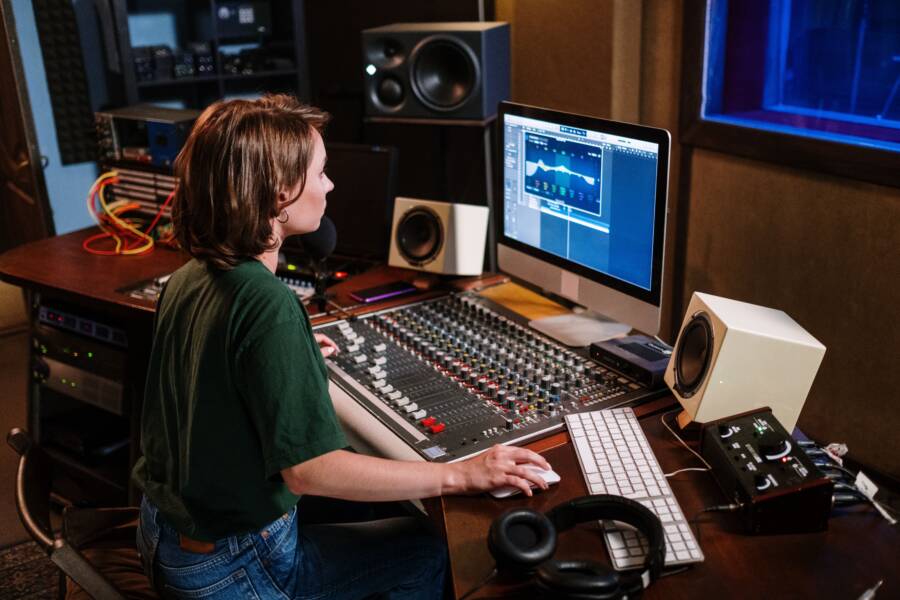
Choosing a better audio environment is a strategic investment in your cognitive performance, productivity, and long-term financial success. It is not just about finding silence, but about the deliberate curation of sonic inputs to align with your personal goals.
When you control your surroundings, you protect the mental bandwidth required for deep, high-value work. Noise pollution acts as a hidden tax on your attention, which often leads to reduced output and missed opportunities. By designing a workspace that supports your specific cognitive needs, you turn your environment into a tool that directly generates better results.
You can begin to reclaim your focus and increase your earning potential by auditing your daily sound profile and removing the friction that holds you back.
How Your Audio Landscape Impacts Wealth and Focus
Your auditory environment is a primary factor in your ability to generate income. Constant noise creates a cognitive load that drains the mental energy needed for complex decision-making. When you cannot maintain focus, your hourly output drops, and you miss opportunities to complete high-value work. By managing your sound profile, you create a private space that shields your attention from external interruptions.
The Hidden Cost of Constant Background Noise
Intermittent noise, such as office chatter or sudden traffic sounds, forces your brain to switch tasks constantly. This phenomenon fragments your attention and prevents you from entering a flow state. During this state, your productivity reaches its peak because you operate without the drag of mental distractions. Every time a noise breaks your concentration, you lose significant time regaining your momentum.
This lack of deep work directly limits your earning potential. If you spend your hours reacting to interruptions, you produce less work than you would in a protected environment. You essentially pay a tax on your income for every minute spent struggling to get back on track. High-performers recognize this cost and take action to build a sensory buffer around their most important tasks.
Soundscapes as a Tool for Productivity
You can replace unpredictable background noise with controlled audio profiles to signal the brain to begin deep work. These soundscapes provide a consistent pattern that masks sudden distractions. You make a deliberate choice to use specific sounds to gain a competitive advantage in your daily workflow.
Different audio profiles offer distinct benefits for your cognitive state:
Brown noise: This sound has a lower frequency than white noise, which provides a smoother, more calming background that helps block out harsh environmental sounds.
Binaural beats: These audio tracks use two slightly different frequencies in each ear to encourage specific brainwave states, such as focus or relaxation.
Instrumental soundscapes: Natural recordings or rhythmic ambient music help maintain a steady pace for those performing repetitive but necessary administrative tasks.
Choose a sound profile that fits the difficulty of your current project. Use rhythmic tracks for steady, task-based work and softer, non-intrusive sounds when you need to solve complex problems. By turning your audio environment into a planned asset, you shift your brain into a state of high output rather than constant reaction. This intentional design is a simple but effective way to ensure your time translates into greater financial results.
Building Your Personal Audio Strategy
A personal audio strategy organizes your workspace to minimize cognitive load. You build this by evaluating your physical space and choosing specific sound profiles for different tasks. This systematic approach shields your attention from distractions and keeps your focus on high-value work that drives revenue.
Auditing Your Current Workspace Acoustics
You cannot improve your audio environment without first identifying where the noise enters your space. Walk through your office or home workspace while everything is quiet to find points of sound leakage. Check the gaps under doors, around window frames, and near air vents. These small openings allow sound waves to travel into your room, which disrupts your focus and lowers your productivity.
Simple, low-cost adjustments often provide immediate relief from external noise. Use draft stoppers for your doors to block sound entering from hallways. If you have hard floors, place thick rugs or carpets in the room to absorb sound reflections. You should also consider acoustic foam panels or heavy curtains, as these materials help dampen echoes that make voices or outside traffic sound louder than they are.
Consider every dollar you spend on these items as a direct investment in your work capacity. Reducing background noise means you reclaim hours previously spent regaining concentration after an interruption. A quieter room allows you to complete complex tasks faster, which translates into higher efficiency and better financial returns over time.
Curating Sound Profiles for Different Tasks
Once you control your physical space, you can use digital sound profiles to anchor your brain in specific modes of work. Your choice of audio depends on whether you are doing creative exploration or high-intensity analytical work. Aligning your soundscape with the task requirements helps you enter a productive state without relying on willpower alone.
Analytical work requires focus, steady patterns, and silence. Use these soundscapes to maintain deep concentration:
White noise or static: These constant frequencies hide sudden, irregular sounds like a slamming door or a phone call nearby.
Low-fidelity lo-fi beats: Steady, instrumental rhythms provide a consistent background that keeps you alert without pulling your focus away from complex data or spreadsheets.
Binaural tracks: These specifically tuned frequencies encourage the brain to sustain a state of high-alert focus for long periods.
Creative work thrives on less structure and more space. Use these soundscapes for brainstorming or writing:
Natural ambience: Recordings of light rain, distant thunder, or forest wind provide a sense of calm that helps clear mental blocks.
Classical or instrumental jazz: Melodic, non-vocal music can spark new connections by keeping your brain engaged without forcing it into a narrow, analytical rhythm.
You can manage these states effectively by using specific apps on your desktop or phone to toggle between audio profiles. Tools like Brain.fm or specialized playlists on streaming platforms allow you to switch your environment instantly. If you move from a deep data analysis session to a creative planning phase, simply update your audio source to match the new objective. This transition acts as a mental trigger, signaling your brain that your working style should change.
Investing in High-Quality Audio Gear as a Business Expense
Treating audio equipment as a business expense is a shift in mindset from seeing it as a hobby to recognizing it as a tool for financial growth. When your work depends on concentration or communication, poor audio quality is a barrier to entry that prevents you from reaching your full earning potential. A professional setup creates a predictable work environment, which reduces the mental energy required to filter out noise. By choosing durable, high-quality gear, you minimize maintenance costs and ensure your workspace remains a reliable asset for years. You are essentially buying back the hours you would otherwise lose to distractions, which directly translates to a higher hourly rate for your output.
Selecting Professional Tools for Better Focus
The best audio tools are those that blend into your workflow and require zero attention once they are active. Closed-back headphones are a primary choice because they create a physical seal that blocks external sounds while keeping your focus internal. These headphones allow you to work in loud environments, like cafes or busy households, without losing the ability to hear your own thoughts or task-specific audio. Unlike consumer-grade options, professional-tier headphones are built with replaceable cables and earpads, meaning you can maintain them for a long time instead of replacing the entire unit every two years.
Acoustic panels and white noise machines serve as stationary supports for your workspace. While headphones handle your direct auditory input, these items condition the room itself. Acoustic panels reduce echo in empty rooms, which makes video calls clearer and prevents ambient sounds from bouncing off hard surfaces. White noise machines offer a consistent frequency profile that masks sudden, jarring sounds like sirens or door slams. You should prioritize these tools based on their durability and their ability to stay functional without constant software updates or complex configurations.
Evaluating the ROI of Your Audio Setup
Calculating the return on investment for your gear is a practical way to justify the expense and measure the impact on your bottom line. You start by determining your current hourly rate or the value of your average project. If an upgrade to your audio environment saves you 30 minutes of focus time each day, you quickly recover the cost of a high-end setup. Over a year, saving just 100 hours of distracted time significantly increases your total output, creating a clear profit margin on your equipment investment.
Consider this breakdown when evaluating a purchase:
Identify the average time lost each day due to noise, such as pauses for refocusing or retaking video calls.
Multiply those daily minutes by your effective hourly rate to find your daily cost of poor audio.
Compare that figure against the lifespan of the equipment to see how quickly it covers its own cost.
High-quality gear often retains value better than budget options, which provides a secondary return if you eventually sell or upgrade your equipment. You aren’t just paying for a device; you are paying for a performance multiplier. If your new setup allows you to complete a project in eight hours instead of ten, you have gained two full hours of capacity to either rest or take on additional billable work. This approach turns an expense into a revenue-generating asset that works as hard as you do.
Common Mistakes When Designing Your Soundscape
You might assume that any background noise is better than complete silence, but your brain processes sound differently depending on the input. Designing an audio environment requires precision. If you pick the wrong sounds, you create extra work for your brain rather than reducing your mental load. Poorly constructed soundscapes lead to fatigue and lower your potential income because you spend your energy processing distractions instead of finishing high-value tasks.
Mismatched Audio for Task Difficulty
Many people play music with lyrics while performing complex analytical work. Your brain naturally prioritizes language, so hearing words forces your cognitive system to process the lyrics while you try to read data or write reports. This creates a bottleneck that slows your output and increases the time you spend on basic tasks. Save music with lyrics for physical work or low-intensity cleaning, where your brain has extra capacity to spare.
When you perform deep work, your audio should remain neutral or repetitive. If you choose tracks that grab your attention, you undermine your focus. Instead, match your audio to the cognitive demand:
Deep analytical work: Use white noise, pink noise, or brown noise to flatten the sound profile and mask interruptions.
Routine tasks: Listen to instrumental music or lo-fi beats that provide a consistent rhythm without demanding attention.
Creative brainstorming: Opt for natural, unstructured sounds like rain or wind to create a sense of space that encourages open thinking.
Over-Reliance on Active Noise Cancellation
Active noise cancellation is a powerful technology, but it isn’t a cure for a loud work environment. These headphones work by creating an anti-phase signal to neutralize steady, low-frequency sounds. However, they struggle with sudden, high-frequency noises such as conversations, laughter, or clattering dishes. Relying entirely on technology often leaves you exposed to the very sounds that cause the most significant disruptions to your focus.
The most effective soundscape design combines physical sound management with digital audio inputs. If you work in an office or a busy home, the goal is to reduce the total volume of incoming noise before you even turn on your headphones. Use heavy curtains or thick rugs to absorb sound energy, which allows your noise-canceling headphones to perform better. When you decrease the ambient volume of your room, you don’t need to crank your headphones to dangerous or fatiguing levels to achieve concentration.
Ignoring Fatigue from Sustained Audio
You might feel that continuous, high-intensity focus music keeps you moving, but listening to the same stimulating tracks for hours often leads to sensory burnout. Your brain requires downtime to recover, even during the work day. If you force yourself to maintain a high-alert state with aggressive, high-tempo, or complex audio for long periods, your productivity will crash by mid-afternoon.
Rotate your audio profiles throughout the day to match your natural energy cycles. Start with high-focus, steady frequencies during your most productive morning hours. Take periodic breaks without any audio input at all to let your ears and your nervous system reset. Switching to softer, ambient soundscapes during the afternoon helps you sustain output without the crash that follows hours of over-stimulation. Treat your audio settings like a variable-speed motor; adjusting the intensity helps you work longer and more efficiently without hitting a wall.
Conclusion
Your environment is an active participant in your earning power. When you curate your surroundings to eliminate noise, you stop paying the hidden tax of constant distraction. Choosing a better audio environment is not merely about comfort; it is about taking ownership of your mental capital to ensure your most important work gets finished.
Shift your mindset from passive acceptance of your surroundings to active design. When you treat your workspace as a tool, you gain the ability to direct your focus at will. Start by auditing your current setup, then select sound profiles that match your specific output goals. This level of intentionality separates those who react to their environment from those who control it to achieve greater success.