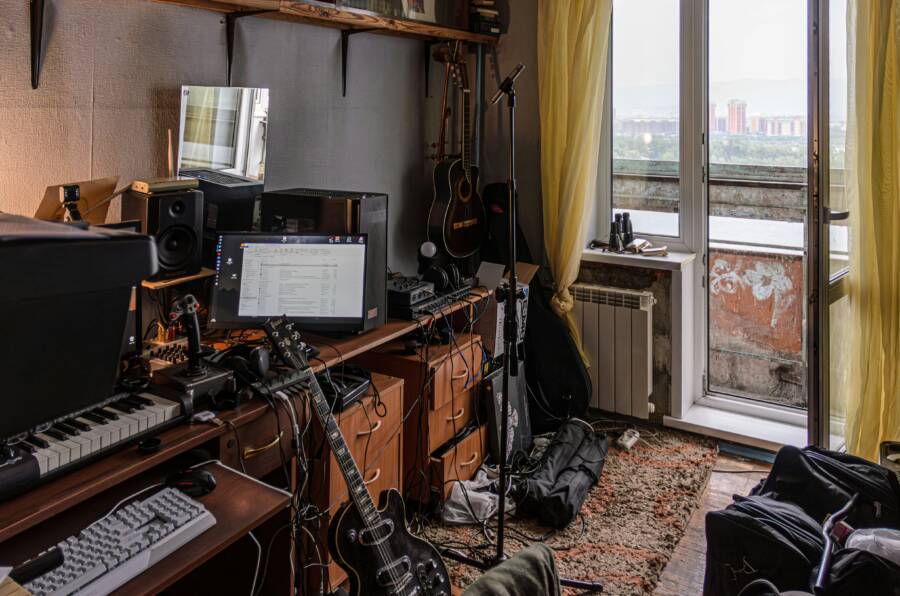
Your sound environment is not just about comfort, but a tool for cognitive performance that directly correlates to your hourly value and professional output. When you control your auditory space, you reduce mental fatigue and increase your ability to finish high-value tasks faster.
Background sound impacts your focus and, consequently, your earning potential. Whether you thrive in silence or require specific white noise, your choices determine how much deep work you complete each day.
Managing your environment leads to better concentration and higher compensation for your time. You can optimize your workspace by adjusting the audio inputs that influence your brain, and the following sections show you how to start.
Why Sound Impacts Your Cognitive Load and Productivity
Your brain has a limited capacity for processing information. Sound is a constant stream of data that your mind must filter, categorize, and interpret. When your environment contains unpredictable or loud noises, your brain works harder to focus on your actual tasks. This extra effort consumes cognitive resources that could otherwise go toward solving complex problems or generating income.
How Constant Interruptions Kill Deep Work
Every time a sudden noise breaks your focus, your brain switches gears to identify the potential threat or distraction. This process is known as context switching. It takes time for your mind to move away from the interruption and return to your original task. Research suggests that regaining full concentration after a distraction takes an average of 20 minutes.
If you earn money through high-level work like writing, coding, or data analysis, these interruptions are expensive. You lose billable hours every time your flow stops. Over a year, small distractions add up to weeks of lost output. This loss directly impacts your professional growth because your inability to finish high-value projects prevents you from taking on more complex, better-paying assignments.
- Direct costs: Unplanned breaks reduce the total number of tasks you complete each day.
- Hidden costs: Mental fatigue from filtering noise makes you slower and more prone to errors.
- Career impact: Frequent interruptions lower the quality of your work, which limits your chances for promotions or higher rates.
The Science of Flow States and Audio Cues
Flow is a state of total immersion where you perform at your highest level. Specific sounds help your brain enter this state more reliably. When you pair a repetitive audio environment with a difficult task, your brain eventually associates that sound with deep work. Over time, the sound acts as an auditory cue that tells your mind it is time to perform.
You can use these cues to bypass the initial resistance you feel when starting a project. Consistent audio inputs act as a barrier against external chaos. By choosing sounds that mask unpredictable noises, you stabilize your environment. This stability frees up the cognitive energy you previously wasted on ignoring office chatter or traffic.
Using a consistent sound profile every time you sit down to work helps you build a strong habit. Your brain treats the chosen audio as a signal to transition into a high-focus mode. This reduces the time spent on procrastination, helping you complete your work faster and protect your hourly income.
Optimizing Your Workspace Audio for Maximum Output
You perform better when your workspace audio matches your task demands. Background sound functions as a filter for your attention, shielding your brain from erratic spikes in noise. When you select the correct soundscape, you maintain your flow state for longer periods. This consistency allows you to complete complex work, improve your accuracy, and ultimately secure higher income by finishing projects faster.
Selecting the Right Soundscapes for Complex Tasks
Your choice of background sound depends on the type of cognitive load your work requires. Different noise profiles trigger unique neurological responses, which affect how well you process data. Use the following guide to match your audio environment to your daily objectives.
- White noise: This sound contains all frequencies at equal intensity. It effectively masks sudden office noises or household sounds. Use white noise for repetitive administrative tasks or routine data entry where you need to block out the world without needing intense focus.
- Brown noise: This profile emphasizes lower frequencies, creating a deep, rumbling quality. It feels more soothing than white noise and helps reduce mental anxiety. Use brown noise when you feel overwhelmed by a deadline or need to settle your nerves before starting a demanding project.
- Lo-fi beats: These tracks provide a rhythmic, predictable structure with minimal lyrics. The repetitive nature acts as a metronome for your brain. Choose lo-fi beats for creative work, such as writing or design, because the steady pace helps you maintain a rhythm without the distraction of language.
Avoid music with lyrics when you perform tasks involving reading, writing, or complex problem-solving. Your brain naturally attempts to process language, which splits your focus and slows down your output. If you must have music, instrumental tracks work better for your productivity than vocal performances.
Using Noise-Canceling Technology as an Investment
High-quality noise-canceling headphones are a business asset rather than a personal expense. If your work requires deep concentration, the time you save by avoiding interruptions has a direct monetary value. Calculate your hourly rate to see how quickly this equipment pays for itself.
When you block out external noise, you stop paying the “interruption tax.” Every time you regain focus after a distraction, you lose valuable minutes that you could bill to a client or spend on a higher-paying task. A premium set of headphones keeps you in a state of flow, protecting your most valuable resource: your time.
- Financial ROI: Compare the cost of the headphones against the value of two or three hours of your time. If better focus allows you to finish a project one hour sooner, your equipment pays for itself in less than a week.
- Mental energy: Investing in better audio gear reduces your end-of-day exhaustion. When you spend less energy filtering out ambient noise, you preserve your mental reserves for evening tasks or personal goals.
- Professional consistency: Reliable hardware ensures you can work from any location, such as a coffee shop or a busy home office. This flexibility allows you to maintain your income stream even when your environment is not ideal.
View your audio setup as an essential component of your workstation. Just as you would buy a reliable computer or a comfortable chair to boost performance, your audio gear dictates how effectively you handle your workload. Small improvements to your environment compound over time, leading to significant gains in your annual earnings.
Connecting Your Environment to Your Income Growth
Your work environment is a financial asset that dictates your hourly output. When you curate your surroundings to eliminate noise, you stop burning through your limited cognitive fuel. This shift preserves your mental energy for tasks that generate higher revenue. By treating your auditory space as a core part of your business infrastructure, you build a foundation for consistent, high-value work.
The Financial Cost of Distraction
Distractions create a hidden drain on your bank account. Every time an outside sound forces you to break focus, your brain incurs a cost in lost time. You can measure this impact by identifying how often your environment interrupts your workflow.
First, track your work habits for three days to find your average number of daily interruptions. Next, multiply that number by 20 minutes, which is the time required to regain deep focus. Finally, multiply those lost minutes by your hourly rate.
For example, if you charge 100 dollars an hour and suffer four interruptions per day, you lose 80 minutes of billable time daily. Over a 20-day work month, this equals roughly 27 hours of lost productivity. At your hourly rate, that is a loss of 2,700 dollars per month.
Reducing these interruptions directly increases your capacity to finish work. You gain back billable hours without working longer days, which effectively raises your total monthly income.
Leveraging High Performance to Increase Your Rates
Consistent, high-level performance is the most reliable way to negotiate better pay. When you control your sound environment, you complete projects faster and with fewer errors. Clients notice this reliability because it sets you apart from freelancers who struggle with inconsistent delivery.
Reliable output builds trust quickly. When you finish work ahead of schedule, you create room to take on more complex assignments or add more clients to your roster. High-quality work becomes your standard rather than an occasional success. This reputation gives you the evidence you need to justify higher rates.
- Consistency: Clients pay a premium for professionals who never miss a deadline.
- Quality: Fewer errors in your output mean clients spend less time managing you.
- Negotiation power: You can show a history of rapid project completion when requesting a raise.
Your ability to stay in a flow state determines the quality of your output. As you improve your auditory environment, you spend less time fixing mistakes and more time creating value. This upgrade to your work process makes it easier to justify a higher price for your expertise.
Common Questions About Managing Background Sound
Managing your sound environment remains a simple way to protect your hourly output and income. Many people struggle to find a balance between total silence and distracting noise. You often have questions about which tools work best for specific tasks. Here are clear answers to the most common concerns regarding sound control and productivity.
Does total silence always improve focus?
Silence is helpful for many, but it is not a universal solution. Some people find complete silence produces a feedback loop where every small sound, like a clicking pen or distant hum, becomes a massive distraction. If you find your mind wandering in a quiet room, consider adding a steady layer of sound like brown noise. This provides a consistent auditory floor that keeps your brain from searching for external stimuli. Silence works best for high-stakes problem solving, while steady noise helps with long, repetitive tasks.
Should I use music with lyrics while working?
Lyrics are a major source of cognitive load. Your brain is hardwired to process language, which means you cannot help but follow the words in a song. This takes up space in your working memory that you need for writing, coding, or planning. If your work involves text or logic, instrumental music is a much safer bet. Save your favorite vocal playlists for downtime or tasks that require less focus.
How do I know if my headphones are high-quality enough?
Price does not always reflect performance. You need gear that physically seals out external sound. Look for headphones labeled as active noise-canceling, as these use microphones to counter ambient frequencies. Test your hardware by wearing them in a noisy coffee shop. If you can still hear sharp or irregular sounds through your music, they are not effective enough for deep work. Remember that these are business tools. A pair that helps you complete one extra hour of work per week will pay for itself very quickly.
Does white noise help everyone equally?
White noise contains all sound frequencies at equal intensity. It sounds like static and works wonders for masking unpredictable sounds. However, some people find the higher frequencies in white noise harsh or tiring over several hours. If you feel fatigued after using white noise, try brown or pink noise instead. Brown noise shifts toward lower, warmer frequencies that most people find more comfortable.
- White noise: Best for masking sharp, sudden noises.
- Pink noise: A balanced middle ground that feels natural to the ear.
- Brown noise: Deep, rumbling, and ideal for long-term comfort.
Experimenting with these profiles helps you find the sound that keeps your brain calmest. You do not need to stick to one type of sound. Change your audio environment based on how tired you feel or the specific demands of your current project.
Conclusion
Your sound environment dictates how effectively you focus, and this focus forms the basis of your daily productivity. When you mask unwanted noise, you prevent the cognitive drain of constant interruptions. This stability allows you to complete complex tasks faster, which directly increases your hourly output and total income.
Personal mastery over your auditory space is a business necessity rather than a comfort preference. You possess the ability to curate a workspace that defends your time and elevates your professional value. By treating your environment as a tool, you turn your focus into a consistent financial asset.