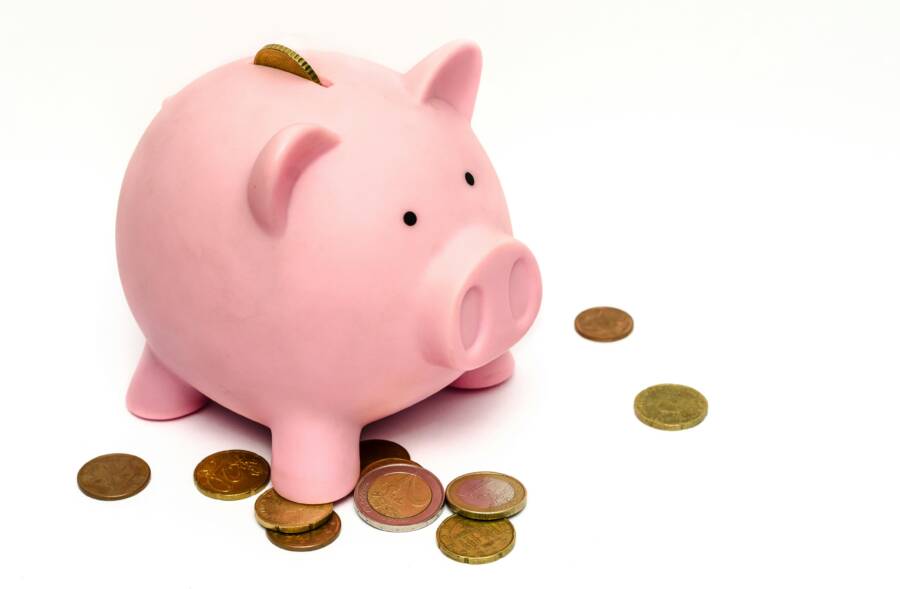
Two friends start with the same spare cash. One spends the extra money on dinners, gadgets, and weekend splurges, while the other keeps reinvesting small savings year after year, and ends up with far more wealth than most people expect.
That gap comes from reinvestment: putting dividends, interest, or savings back into assets so they can buy more shares, earn more income, and keep growing. A $100 or $200 monthly habit may look small at first, but with time and compounding, it can build real wealth, even from a coffee fund or a few skipped impulse buys.
The scale matters, too. The Federal Reserve has reported that the median retirement account balance for U.S. families is far below what many people need for a secure future, which is why small, steady habits matter so much. A person who keeps reinvesting can build a very different outcome than someone who lets gains sit still or disappear.
In the sections ahead, you’ll see how this habit works, where to start, and how to turn modest monthly savings into lasting growth without needing a huge income.
Why This One Habit Beats Saving Alone Every Time
Saving money matters, but saving alone has a ceiling. When cash sits in a low-yield account, it grows slowly and often loses ground to taxes, fees, and inflation. Reinvesting changes that math by putting gains back to work, month after month.
That is why the habit matters so much. A small amount, repeated over time, can outgrow a larger amount that stays idle. The difference gets clearer when you compare the same $200 a month over 30 years.
Bank Savings vs Reinvested Investments: A Side-by-Side Look
Using 2026-style assumptions, here is the difference between a monthly $200 habit in a bank account earning 2% and the same amount reinvested at 8%. The numbers speak for themselves.
| Time period | 2% bank savings | 8% reinvested growth |
|---|---|---|
| Year 10 | about $26,500 | about $36,800 |
| Year 20 | about $58,900 | about $118,500 |
| Year 30 | about $98,500 | about $297,900 |
The gap starts small, then widens fast. By year 30, the reinvested path is worth roughly three times more.
A few details make the difference even stronger:
- Bank savings give you safety and liquidity, but very modest growth.
- Reinvested investments keep generating returns on both your deposits and your past gains.
- Retirement accounts can add tax benefits, so more money stays invested instead of going to taxes each year.
- Compounding rewards patience, so the longest period usually gives the best results.
The habit that wins is the one that keeps money working after you have already earned it.
That is also why tax-advantaged accounts matter. In a 401(k), IRA, or similar retirement plan, reinvested gains can grow without the drag of yearly taxes, which gives compounding more room to do its job. Over decades, that advantage can be just as important as the return rate itself.
The Mindset That Makes Reinvesting Stick
Reinvesting works best when you treat savings as seeds, not spending money. Seeds do nothing useful if you keep digging them up. Put them in the ground, give them time, and they grow into something far larger than the first deposit.
Patience is the real habit behind the habit. You skip the quick reward now so your money can build a bigger reward later. That takes delayed gratification, but it also builds confidence because every reinvestment adds another layer of future value.
Warren Buffett put it plainly: “Someone is sitting in the shade today because someone planted a tree a long time ago.”
That idea fits this strategy perfectly. Each reinvested dividend, interest payment, or monthly transfer is a small tree planted for your future. The more consistently you plant, the more shade you eventually enjoy.
The Power of Compound Interest in Action
Compound interest turns small, steady moves into large results. The first few years may look slow, but the pace changes over time because your gains start earning gains of their own.
That is the real strength of reinvestment. You keep adding money, you keep reinvesting the returns, and the snowball gets bigger each year. The chart below shows how that can look with a simple plan.
See the Snowball Effect Year by Year
Using a $5,000 starting balance and $100 a month at 7% annual growth, the account can build much faster than most people expect. A 7% rate is a reasonable long-term planning number for stock-market investing, and it lines up with the market’s long-run inflation-adjusted return history in broad terms.
Here is what that path can look like over time:
| Time | Estimated balance |
|---|---|
| Year 1 | about $6,400 |
| Year 5 | about $13,200 |
| Year 10 | about $24,700 |
| Year 20 | about $63,300 |
| Year 30 | about $153,800 |
| Year 40 | about $345,900 |
The pattern matters more than any single year. Early on, your deposits do most of the work. Later, the compounding starts to pull harder, and growth speeds up.
A few milestone checkpoints make the trend easier to see:
- Around year 10: you are still below $50,000, but the account is moving at a steady clip.
- Around year 20: the balance passes $60,000+, and the growth curve starts to look much steeper.
- Around year 40: the account reaches hundreds of thousands, even though the monthly deposit stayed modest.
Compound interest rarely feels dramatic at first. Then one day, the balance starts doing more of the work than you do.
The exact result depends on market returns, fees, taxes, and timing. Still, the point stays the same, a small reinvestment habit can build real wealth when it gets enough years to work.
What Happens If You Start Late or Small
Starting early gives compounding the most room to grow, but a late start still matters. Time is the biggest advantage, yet consistent saving can still create a strong outcome even if you begin later.
Here is a simple comparison using the same $100 monthly contribution and 7% growth:
| Start age | Years invested by age 65 | Estimated balance at 65 |
|---|---|---|
| 25 | 40 years | about $345,900 |
| 35 | 30 years | about $153,800 |
That gap is real, and it shows why early action helps so much. Ten extra years can more than double the ending value because compounding has more time to stack.
Still, late starters should not wait for the perfect moment. A person who begins at 35 and keeps going is in a much better place than someone who never starts at all. Even $50 a month can grow into something meaningful over decades.
For example, a smaller habit at 7% can still build a solid base:
- $50/month for 30 years can grow into a five-figure sum.
- $50/month for 40 years can become a much larger pool of capital.
- Automatic reinvestment matters as much as the amount, because it keeps money working without constant decisions.
The message is simple. Early is best, but later is still better than never. What counts most is getting money into motion and keeping it there long enough for compound growth to do its job.
Real People Who Turned Pennies Into Fortunes This Way
Big wealth rarely starts with a big deposit. More often, it starts with a small habit that never stops, even when the amount feels too modest to matter. These examples show how steady reinvestment can turn small monthly savings into serious money over time.
What makes these stories useful is their simplicity. One person kept buying blue-chip stocks with a small monthly amount and let dividends buy more shares. Another chose index funds, turned on automatic reinvestment, and stayed with the plan for nearly two decades.
The Part-Time Worker Who Built a $2 Million Nest Egg
In 1985, this worker started with just $150 a month. The amount was small, but the habit was strong. Each dividend got reinvested into blue-chip stocks, so the portfolio kept buying more shares instead of paying out cash to spend.
That choice changed the pace of growth. As the years passed, the shares generated more dividends, which bought even more shares. The account kept feeding itself, year after year, until the balance reached about $2 million by 2026.
A few lessons stand out:
- Consistency beat size: The monthly amount was modest, but it never stopped.
- Reinvested dividends did the heavy lifting: Cash payouts would have slowed growth.
- Blue-chip stocks added stability: Large, established companies often pay steady dividends.
This is the kind of result that surprises people who only look at the first deposit. A $150 habit can seem ordinary on payday, yet it can become a large nest egg when time stays on its side. The worker did not need a windfall, just patience and discipline.
Small deposits matter most when they keep earning after you forget about them.
How a Recent Grad Hit $500k by Age 45
A newer investor took a different path, but the principle stayed the same. After graduating, this person began investing in index funds in 2006 and set every dividend to auto-reinvest. That removed the guesswork and kept the money compounding without extra effort.
Index funds helped because they spread risk across many companies. Instead of trying to pick winners, the investor owned the market in one simple package. Over time, steady contributions and automatic reinvestment built a portfolio worth about $500,000 by age 45.
The lesson here is simple. A person does not need perfect timing, a large salary, or constant trades. What matters more is a plan that keeps running in the background.
The habits that made this work were plain:
- Start early enough to give compounding time
- Invest in broad funds that keep costs low
- Turn on auto-reinvest and leave it alone
- Keep buying through good markets and bad ones
That last point matters most. Consistency is boring in the short run, but it can be powerful over years. When you keep adding and reinvesting, your money begins to work like a second paycheck, one that grows while you stay focused on life.
Your Easy 5-Step Plan to Start Reinvesting Today
Getting started with reinvesting does not require a complex plan. You just need the right accounts, the right investments, and a system that keeps money moving without constant effort.
The best approach is simple: choose accounts with tax advantages, buy assets that pay you back, automate the process, and check in often enough to stay on track. That rhythm turns scattered savings into a steady wealth habit.
Step 1: Choose Accounts That Supercharge Your Savings
Start with the account, because taxes can shape your long-term results. A Roth IRA lets your money grow tax-free after you fund it with after-tax dollars, while a traditional IRA can give you a tax deduction now and tax-deferred growth later. A brokerage account gives you more flexibility, which helps if you want to invest beyond retirement limits.
Each account has a different job. Roth IRAs work well if you want tax-free withdrawals later, traditional IRAs help if you want a current tax break, and brokerage accounts are useful for extra reinvestment outside retirement rules.
Low fees matter too, because high costs eat into compounding. For 2026, Vanguard and Fidelity are still strong places to look if you want broad fund choices and low-cost access. That matters more than flashy features.
Pick the account that fits your goals, then keep it funded. The less friction you create, the easier it becomes to stay consistent.
Step 2: Pick Investments Ready for Reinvestment
Once the account is set, choose investments that naturally feed the reinvestment habit. Dividend ETFs work well because they pay out cash regularly, and broad S&P 500 funds offer simple, diversified exposure to large U.S. companies. Both can fit a long-term plan.
Dividend reinvestment plans, or DRIPs, make the process even easier. When a fund or broker offers a DRIP, your dividends automatically buy more shares instead of sitting as cash. That means each payout goes right back to work.
This matters because reinvestment creates more future income. More shares usually mean more dividends later, and that cycle keeps building.
A simple way to start is this:
- Use broad index funds for the core of your portfolio.
- Add dividend-paying funds if you want regular cash flow.
- Turn on auto-reinvest whenever the option is available.
- Avoid chasing the highest yield, because yield alone can be misleading.
A steady fund with automatic reinvestment often beats a flashy payout that doesn’t hold up.
Step 3: Automate Everything to Stay Hands-Off
Automation removes most of the excuses. Set up recurring deposits so money moves into your account on payday, before you have time to spend it. Then turn on auto-reinvest so dividends and interest keep compounding without extra clicks.
This works because habits break when they depend on mood. Automation keeps the process going even when you are busy, tired, or tempted to wait.
Apps like Acorns or M1 can help if they fit your style. They are useful for people who want a simple setup, small starting amounts, or a more hands-off portfolio structure. Still, the app matters less than the habit behind it.
A clean setup usually looks like this:
- Schedule an automatic transfer each week or month.
- Choose the investments you want to buy.
- Turn on dividend reinvestment.
- Leave the system alone unless your goals change.
The less you have to think about it, the more likely you are to keep it going.
Step 4: Monitor Without Obsessing
Reinvesting works best when you give it room to grow. Check your accounts quarterly so you know whether your deposits are still on track, then rebalance once a year if your mix drifts too far from your target.
Tools like Personal Capital can help you see the full picture in one place. That makes it easier to track balances, allocations, and progress without getting stuck in daily noise.
Frequent checking can backfire. It tempts you to react to short-term moves that do not matter much over years. A calm review schedule keeps you informed without turning investing into a second job.
A good rule is simple:
- Review contributions every few months.
- Rebalance once a year if needed.
- Ignore daily market swings unless your plan truly needs a change.
- Focus on whether the habit is still running.
That balance keeps you engaged without letting fear or excitement take over.
Sneaky Mistakes That Derail Reinvestment, and Fixes
Reinvestment works best when you protect the habit from small, costly mistakes. Most people do fine when markets rise, but they get shaky when prices fall or fees look harmless on paper. That is where progress slips away.
The good news is that these mistakes are easy to spot once you know what to watch for. If you can stay invested through rough patches and keep costs low, your money has a much better chance to compound for years.
Avoid Cashing Out Early During Dips
A market drop can trigger bad timing. People see red numbers, panic, and sell at the worst possible moment. That move turns a paper loss into a real one, and it often breaks the reinvestment habit for good.
The 2008 crash is a clear example. Investors who sold near the bottom locked in steep losses, while those who stayed invested and kept reinvesting had a far better chance to recover as markets rebounded. The ones who held on did not need perfect timing, just patience.
That matters because rebounds often come after fear is highest. If you cash out during a dip, you miss the recovery and the next round of compounding. If you keep buying through the slump, you pick up more shares at lower prices.
A steadier response helps:
- Keep your automatic contributions running.
- Reinvest dividends even when prices look weak.
- Review your plan before the market drops, not during it.
- Hold cash only for real short-term needs, not panic.
A market dip can feel like a setback, but for a long-term investor, it can also be a cheaper buying window.
The fix is simple, though it takes discipline. Set your rules before fear shows up. If your time horizon is years, not months, stay with the plan and let the downturn pass.
Skip Costly Funds That Eat Your Gains
Fees may look small, but they work against compounding every single year. A fund with a 0.03% expense ratio keeps almost all of your money invested. A fund with a 1% expense ratio takes a much bigger bite, year after year.
That difference compounds just like your returns do. Over 30 years, the gap can become large enough to change your ending balance by tens of thousands of dollars, depending on how much you invest and how the market performs. The higher-cost fund leaves less money behind to grow.
Here is the simple takeaway:
| Expense ratio | What it usually means |
|---|---|
| 0.03% | Very low drag on returns |
| 1% | Much higher long-term cost |
When you compare them over decades, the cheaper choice gives compounding more room to work. A small fee saved every year can keep building on itself, while a high fee quietly slows the whole machine.
The fix starts with reading the expense ratio before you buy. Broad index funds and many ETF options keep costs low, which helps your reinvested gains stay in the account instead of leaking out in fees. That makes a real difference when you are building wealth one deposit at a time.
A few checks help you avoid expensive mistakes:
- Compare expense ratios before choosing any fund.
- Watch for hidden trading or account fees.
- Favor broad, low-cost funds for long-term reinvestment.
- Revisit old holdings, because high fees can hide in accounts you already forgot about.
Small costs feel harmless in the moment. Over time, they become a slow drain on the very money you are trying to grow.
Best Platforms and Tips Tailored for 2026
The right platform makes reinvestment easier, cheaper, and more consistent. In 2026, the best choice is the one that fits your habits, keeps fees low, and removes the urge to tinker. If you want wealth to build in the background, your platform should help you stay steady.
Best Platforms for Reinvesting Small Savings
Different platforms fit different goals. Some work better for hands-off investing, while others suit people who want more control and lower costs. The best one is usually the one you will keep using.
A simple comparison helps narrow the field:
| Platform type | Best for | Main strength |
|---|---|---|
| Vanguard | Long-term index investing | Low-cost funds and simple reinvestment |
| Fidelity | Broad investing and retirement accounts | Strong fund choices and easy automation |
| Schwab | Investors who want flexibility | Good all-around account options |
| M1 Finance | Hands-off portfolio building | Automatic investing and rebalancing |
| Acorns | Small, frequent contributions | Easy setup for beginners |
For many savers, Vanguard and Fidelity remain strong picks because they keep costs low and support reinvestment well. If you want more automation, M1 Finance or Acorns can make small deposits feel effortless. Meanwhile, Schwab is a solid option if you want a wide mix of account types and investment choices.
The best platform is the one that helps you keep buying without making the process feel heavy.
What to Look for in 2026 Before You Open an Account
The platform matters less than the details inside it. Fees, account types, and reinvestment options shape how much of your money actually stays invested. A small cost difference can drain growth over time.
Before you sign up, check for these points:
- Low expense ratios on the funds you plan to buy.
- Automatic dividend reinvestment so cash does not sit idle.
- Recurring transfers that move money in on a fixed schedule.
- Account access for IRAs, Roth IRAs, or brokerage accounts, depending on your goal.
- Clear fee rules for trades, maintenance, and transfers.
Taxes also matter. A platform that supports tax-advantaged accounts can help more of your gains stay in the account, which gives compounding more room to work. That matters especially if you plan to reinvest for decades.
Tips That Keep the Reinvestment Habit Strong
A good platform helps, but your habits do the real work. Small, repeatable actions matter more than perfect timing. The goal is to make reinvestment feel normal, almost automatic.
Start with a simple rhythm. Then protect it.
- Set one monthly transfer you can keep up with.
- Turn on dividend reinvestment for every eligible holding.
- Use broad funds first so you do not chase short-term moves.
- Raise your contribution when income rises, even by a little.
- Review once in a while, but avoid daily checking.
That last step matters more than people think. Constant monitoring can pull you off track, especially when markets move. A steady plan, plus a platform that supports it, keeps small savings working in the same direction for years.
The right setup in 2026 is simple, low-cost, and boring in the best way. It gives your money a job, then gets out of the way.
Conclusion
The habit is simple, but the results are not small. Start with what you can afford, keep reinvesting every dividend or gain, and let time do the heavy lifting.
That is how modest savings turn into real wealth. A $50 monthly start may feel minor now, yet a steady reinvestment plan can grow into a future that looks very different from today.
Open an account, set up automatic reinvestment, and commit to the habit now. The sooner that money goes back to work, the sooner your future balance begins to look like financial freedom.