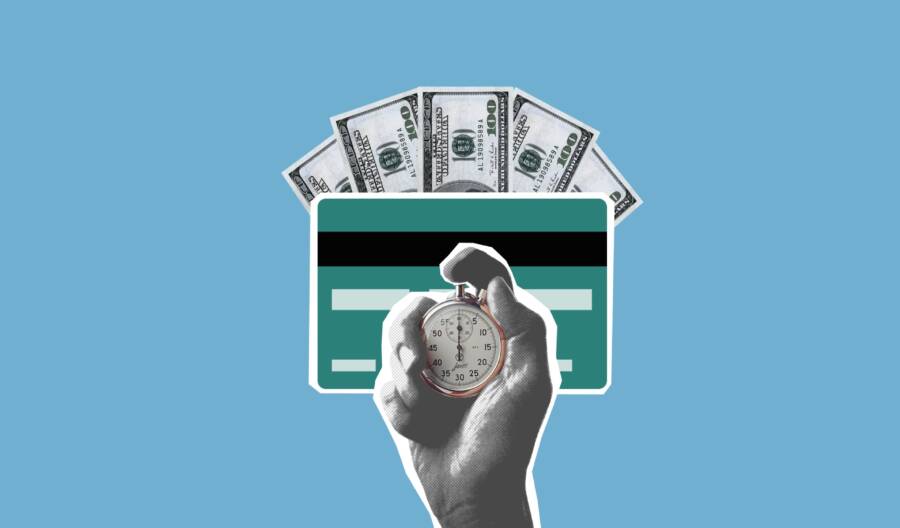
Rushing the financial process forces you into high-risk bets and leads to burnout when expected returns fail to materialize instantly. You often chase trends or react to market volatility, which clouds your judgment and causes you to miss long-term growth opportunities.
Patience is the primary driver of wealth because it allows your capital to benefit from the compounding effect. When you stop hurrying, you gain the clarity needed to make decisions based on logic rather than panic or pressure.
This shift in perspective protects your assets and keeps your goals on a sustainable path. By moving away from the need for immediate results, you secure a more stable future. Let us examine how slowing down your approach changes your financial trajectory.
The Hidden Costs of Always Rushing Your Financial Decisions
Financial haste acts as a silent tax on your net worth. When you move too quickly, you prioritize speed over accuracy, which creates avoidable gaps in your wealth-building plan. Most people react to market noise by jumping into trends that have already peaked. This behavior forces you to buy high and sell low, a cycle that steadily erodes your capital. By slowing down your decision-making process, you gain the objectivity needed to evaluate assets based on their actual value rather than current social momentum.
Why Impatience Leads to Expensive Financial Mistakes
Impatience creates a pattern of self-sabotage that drains your account balance over time. When you fear missing out on a quick gain, you often abandon your long-term strategy for unverified opportunities. This short-term mindset results in several specific financial losses that are difficult to recover from later.
Panic selling occurs when you react to temporary market dips instead of holding your positions. You realize losses that only existed on paper, which prevents your investments from recovering when the market eventually stabilizes.
Transaction fees and tax consequences accumulate rapidly when you trade frequently. Every time you buy or sell a security, you pay commissions and realize capital gains taxes that shrink your total return.
Chasing speculative trends often leads to buying assets at inflated prices. You then face the reality of a correction, leaving you with devalued holdings that do not fit your original goals.
These mistakes happen because panic overrides logic. When you rush, you overlook essential details like expense ratios, tax implications, and the underlying risk profile of an investment. Taking extra time to review these factors allows you to filter out bad ideas before they cost you money.
The Emotional Toll of Chasing Instant Wealth
The pursuit of immediate growth creates a state of constant anxiety that degrades your quality of life. When your self-worth ties directly to daily portfolio fluctuations, your mental health suffers. You find yourself checking apps every few minutes, reacting to every red or green arrow, and losing sleep over variables you cannot control. This emotional instability does not just hurt your peace of mind; it actively damages your ability to think clearly during market shifts.
Consistent decision-making requires a baseline of calm. If you base your financial life on the need for instant gratification, you struggle to sustain the discipline required for long-term compounding. You start to view boredom as a negative state rather than a sign of a healthy, passive investment strategy. This shift in perception often leads to over-trading as a way to alleviate the boredom, which only invites more risk into your life.
Building wealth is a slow, quiet process that rarely feels rewarding in the short term. Those who resist the urge for instant success protect their focus and keep their financial goals on a realistic path. By detaching your emotions from market noise, you stop making impulsive moves that sabotage your growth. True financial security comes from the boring, steady accumulation of assets over many years, not from the adrenaline of trying to hit a home run in a single day.
What Happens When You Finally Stop Rushing the Process
Financial success is not a sprint, despite what many social media influencers suggest. When you stop trying to force immediate returns, you remove the artificial pressure that leads to poor choices. You transition from a gambler looking for a quick payout to an investor building a durable foundation. This shift provides the mental space necessary to view your accounts as a long-term resource rather than a scorecard for daily performance.
How Time Becomes Your Greatest Financial Asset
Compounding is the mathematical reality that turns small, consistent contributions into significant wealth. It is the process of earning returns on your previous returns, which causes your money to grow at an increasing rate over time. While the first few years often feel slow and unproductive, the growth curve eventually turns vertical as the total base of your assets expands.
If you rush the process, you constantly interrupt this momentum. Selling your positions or moving money into speculative assets resets your clock, often forcing you to start the compounding cycle from a smaller base. Patience acts as a force multiplier for every dollar you save.
Consider how the math changes with time:
A 25-year-old who invests 500 dollars monthly at an 8% return has over 1.7 million dollars by age 65.
A 35-year-old attempting to reach that same goal must invest over 1,200 dollars monthly to catch up.
The 10-year head start provided by starting earlier allows the younger investor to reach a larger result with less than half the out-of-pocket cost.
You do not need to be a genius to build wealth; you only need to be consistent and remain invested during periods of market uncertainty. When you stop rushing, you stop fighting against the math and allow time to do the heavy lifting for you.
Developing a Clearer Financial Vision
Removing the pressure to achieve overnight success changes how you process information. When you operate under the fear of missing out, you filter data through an emotional lens. You prioritize loud news cycles and viral trends that offer the promise of immediate gains. This approach causes you to ignore fundamental metrics like cash flow, debt ratios, and long-term viability.
Once you accept that wealth creation requires years of steady input, your decision-making becomes data-driven rather than reaction-based. You start asking questions that serve your future self. Instead of worrying about what the market will do tomorrow, you focus on variables you can control.
These shifts define a logical financial vision:
You prioritize assets that generate reliable cash flow or predictable growth rather than volatile speculative bets.
Your portfolio strategy becomes robust because you have the time to research investments before allocating your capital.
You stop viewing temporary market dips as crises. Instead, you see them as opportunities to purchase quality assets at lower price points.
You stop wasting energy on short-term noise that does not impact your destination. By focusing on your long-term plan, you create a buffer against the panic that causes most people to abandon their strategy at the worst possible moment. This clarity turns your financial life into a calm, systematic operation instead of a constant source of stress.
Practical Steps to Shift from Sprinting to Long-Term Investing
Moving from a reactive, short-term mindset to a durable long-term strategy requires intentional changes to your daily habits. Success in the market depends on consistency rather than the ability to time every move. By focusing on your inputs, such as your savings rate and financial education, you remove the unnecessary pressure of watching your account balance move every hour.
Setting Milestones That Aren’t Just About Money
Fixing your eyes solely on your total account value often leads to frustration because market fluctuations are outside of your control. You gain more stability when you track metrics that depend entirely on your own actions. By prioritizing controllable habits, you maintain momentum even when the broader market remains flat or enters a period of decline.
Consider these non-monetary milestones to measure your progress:
Your personal savings rate provides a clear view of your discipline. Aim to increase this percentage incrementally, perhaps by one percent every six months, rather than worrying about the current value of your holdings.
Financial education acts as a long-term investment in your decision-making ability. Commit to reading specific books or studying asset allocation principles for a set number of hours each month.
Automating your contributions creates a habit of paying yourself first. If you set up a system that transfers funds to your brokerage account on the same day you receive your paycheck, you hit a milestone simply by staying consistent.
Reviewing your asset allocation once a year keeps you aligned with your goals. This prevents you from reacting to daily noise and ensures your portfolio structure remains sound.
When you shift your attention toward these systems, you define success through your own behavior. You stop feeling like a failure when prices drop and instead view the market through the lens of your established plan. This change in focus creates the patience needed for long-term compounding to occur.
Automating Your Way to Financial Freedom
Systems eliminate the emotional burden of manual decision-making. When you rely on willpower to invest every month, you eventually face moments of doubt during market corrections. Automation removes this conflict by placing your financial life on a predictable schedule that functions regardless of how you feel about the headlines.
Establishing an automated system starts with simple, repeatable rules that remove the human element from your portfolio. Once you configure these settings, you stop needing to force trades or time your entries.
Schedule recurring transfers from your primary bank account to your investment account to occur immediately after your pay hits.
Direct these funds into a diversified, low-cost index fund or a target-date fund to keep your asset allocation simple.
Ignore the temptation to manually trade or adjust your holdings based on temporary news cycles.
Set a recurring annual calendar alert to rebalance your portfolio, which keeps your risk levels consistent without requiring daily monitoring.
This setup turns wealth building into a background process rather than a full-time task. You no longer worry about missing a dip or overreacting to a spike because your contributions move forward automatically. Your wealth grows because you built a machine that works for you, keeping your strategy on track without any extra effort or mental fatigue.
Common Questions About Slowing Down Your Wealth Strategy
Investors often worry that slowing down their pace means missing out on growth or failing to reach their goals on time. However, the decision to stop rushing is a change in methodology rather than a reduction in effort. Many people wonder how a slower approach remains compatible with aggressive long-term goals or how it reconciles with the constant need for market engagement. These questions typically stem from the idea that activity equals progress. Addressing these concerns clarifies why patience is often the most effective tool in your portfolio.
Does slowing down mean I will earn less money?
Slowing down does not mean you stop building wealth. It means you stop making unnecessary trades that trigger taxes and fees. High transaction volume frequently lowers your net performance because each move incurs costs and risks. By holding assets for longer periods, you allow compounding to operate without interruption. Historical data consistently shows that the most successful investors are those who remain invested during long market cycles rather than those who attempt to jump in and out. Your total returns depend on the quality of your assets and the time they spend in the market, not on how often you adjust your holdings.
How do I know if I am being patient or just lazy?
There is a distinct difference between a passive strategy and a lack of interest. A deliberate, slower strategy involves heavy research before you buy and a clear plan for when you might sell. You are being patient if you maintain a rigorous savings rate and rebalance your portfolio according to a set schedule. Conversely, laziness involves ignoring your accounts, failing to adjust for inflation, or neglecting your tax planning. True patience requires active oversight to ensure your investments still match your financial goals. You remain in control of your destiny, but you operate with a focus on years instead of days.
Won’t a slow strategy leave me behind when the market spikes?
Market spikes are often unpredictable, and trying to capture every upward move usually results in getting caught in the subsequent corrections. When you prioritize a long-term trajectory, you accept that you will miss some short-term rallies. This trade-off is necessary to avoid the much larger losses that occur when investors try to time the market. A consistent strategy provides exposure to the overall growth of the economy over time. You gain stability by ignoring the noise and staying the course, which protects your capital for the moments that truly drive long-term gains.
What should I focus on if I am not watching the market?
If you stop watching daily price movements, you should redirect that energy toward your personal financial inputs. These variables are fully within your control and have a larger impact on your net worth than any single stock pick. Focus on these areas to improve your financial position without needing to guess where the market goes tomorrow:
Increasing your savings rate by a set percentage each year significantly impacts your final account value.
Optimizing your tax strategies helps you retain more of the growth your investments generate.
Expanding your financial education allows you to make better decisions about asset allocation and risk management.
Automating your contributions removes the friction of decision-making and ensures your strategy remains consistent.
Refocusing on these habits creates a reliable foundation for your wealth. You become less dependent on external market luck and more reliant on your own consistent actions. Over the span of a decade, this internal discipline proves far more reliable than any attempt to predict short-term volatility.
Conclusion
Building long-term wealth is a marathon, not a sprint. When you stop forcing immediate results, you stop making reactive decisions that erode your capital through unnecessary fees and taxes. You gain the ability to focus on high-quality assets that grow through steady compounding.
Time is your most reliable ally in this process. By automating your contributions and maintaining a consistent strategy, you remove the emotional burden of market volatility. You replace the anxiety of daily tracking with the calm of a proven, systematic plan.
Your financial future depends on your ability to remain patient while others panic. Keep your focus on controllable inputs, such as your savings rate and personal education, to ensure your wealth grows reliably over time.